
Reviewed by Elyssa A. Blissenbach, MD, a board-certified internist. This article is for education and is not a substitute for medical advice.
Here is a Southern twist on the Lyme disease story that surprises many patients: you can get a bullseye-style rash from a tick bite in Florida or Georgia and have it not be Lyme disease. The look-alike is called STARI, southern tick-associated rash illness, and knowing the difference matters for anyone who spends time outdoors in the Southeast.
What STARI Is
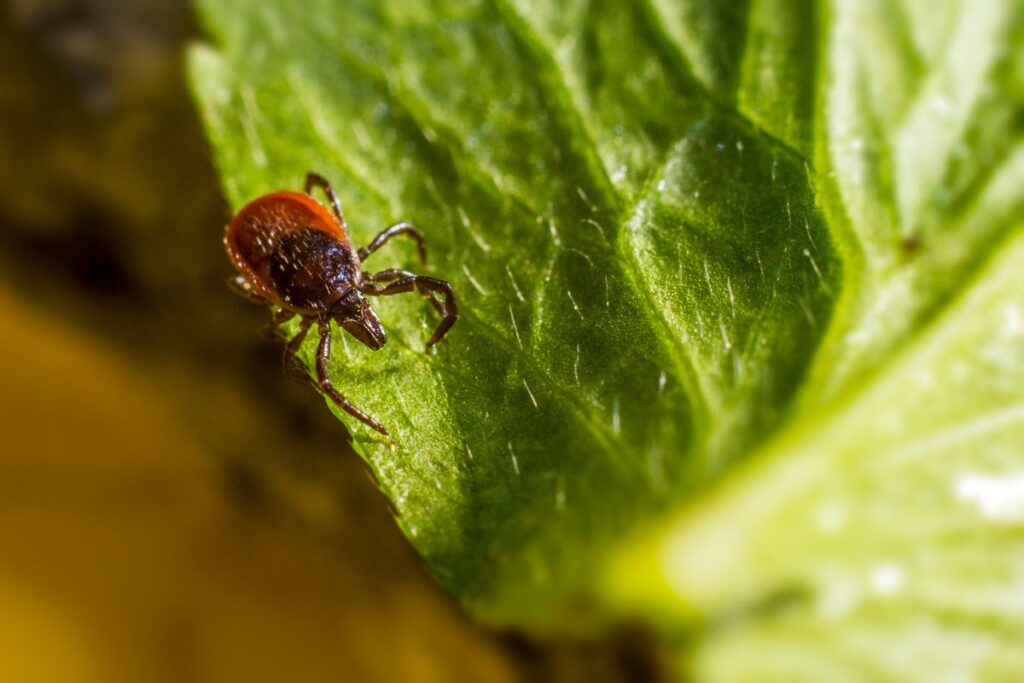
STARI follows the bite of the lone star tick (Amblyomma americanum), an aggressive, fast-moving tick that is extremely common across the southeastern United States, including Florida. Days after the bite, an expanding red rash appears that can look remarkably like the erythema migrans rash of Lyme disease (see what the Lyme bullseye rash looks like), sometimes with fatigue, headache, fever, or muscle aches.
Despite years of study, the cause of STARI has not been identified. What research has shown is that it is not caused by the Lyme disease bacteria, and the lone star tick is not considered a competent transmitter of Lyme.
How STARI and Lyme Differ
- The tick. Lyme comes from blacklegged (deer) ticks; STARI follows lone star tick bites. Lone star females have a distinctive white dot on the back.
- The aftermath. STARI has not been linked to the arthritis, neurologic, or heart complications that untreated Lyme can cause.
- Testing. Lyme antibody tests are negative in STARI, because it is not Lyme.
- Geography. In the Deep South, a bullseye-like rash is statistically more likely to be STARI, but Lyme is not impossible, especially with travel to higher-risk regions.
Why You Should Not Just Shrug It Off
First, the distinction is rarely obvious in the moment, and clinicians often treat an expanding rash with doxycycline regardless, which covers early Lyme. Second, the lone star tick carries plenty of trouble of its own: it is the main driver of ehrlichiosis in the Southeast and of alpha-gal syndrome, the tick-acquired red-meat allergy. A lone star tick bite is not a free pass.
What to Do After a Bite With a Rash
Photograph the rash with a size reference, save or photograph the tick if you can, note the date, and get evaluated promptly. An accurate diagnosis, STARI, Lyme, or another tick-borne illness, determines what monitoring and treatment you actually need.
Get Evaluated by a Lyme-Literate Physician
Whether you are dealing with a recent tick bite or symptoms that have gone unexplained for months, an accurate evaluation is the most important step. Dr. Blissenbach provides Lyme disease diagnosis and treatment for patients in person in Northeast Florida and by telemedicine across Florida, Georgia, Alabama, South Carolina, North Carolina, and Virginia.
Contact our office to schedule an in-person or telehealth appointment.
Frequently Asked Questions
Can you get Lyme disease from a lone star tick?
The lone star tick is not considered a competent transmitter of Lyme disease. Its bites are, however, linked to STARI, ehrlichiosis, and alpha-gal syndrome.
How do I know if my rash is STARI or Lyme?
You often cannot tell by looking. The tick type, your travel history, and testing help your physician sort it out, and treatment may be similar early on.
Is STARI dangerous?
STARI itself has not been linked to the long-term complications of Lyme disease, and symptoms typically resolve. But the same tick transmits other illnesses that do need attention.
Are lone star ticks common in Florida?
Yes. They are among the most commonly encountered ticks in Florida and throughout the Southeast, and they bite humans readily.
This article is informational and not a substitute for medical advice. If you have symptoms after possible tick exposure, seek prompt medical care.
Image: Photo via Pexels (pexels.com/photo/4564831)