
Medically reviewed by Elyssa A. Blissenbach, MD, board-certified internal medicine physician.
Key Takeaways
- Despite its name, most RMSF cases occur in the Southeast and South-central U.S. — North Carolina is consistently among the highest-reporting states.
- Watch for sudden high fever, severe headache, and muscle pain 3–12 days after a tick bite; the spotted rash usually arrives 2–4 days after the fever — and about 1 in 10 patients never gets one.
- RMSF is the most dangerous tick-borne disease in the U.S. untreated — but doxycycline, started promptly on clinical suspicion, drops fatality below 1%.
- Treatment should never wait for test results: antibody tests are usually negative in the first week of illness.
Rocky Mountain spotted fever (RMSF) is a bacterial infection transmitted by tick bite that begins with sudden fever, severe headache, and muscle pain — and, despite its Western name, it is overwhelmingly a disease of the Southeast and South-central United States. It is both the most dangerous tick-borne illness in the country when untreated and one of the most curable when doxycycline is started early. That combination makes recognizing it quickly a genuinely life-saving skill.
This guide covers how RMSF presents, how it differs from Lyme disease, and why treatment is started on suspicion rather than on test results.
What Causes RMSF, and Which Ticks Carry It?
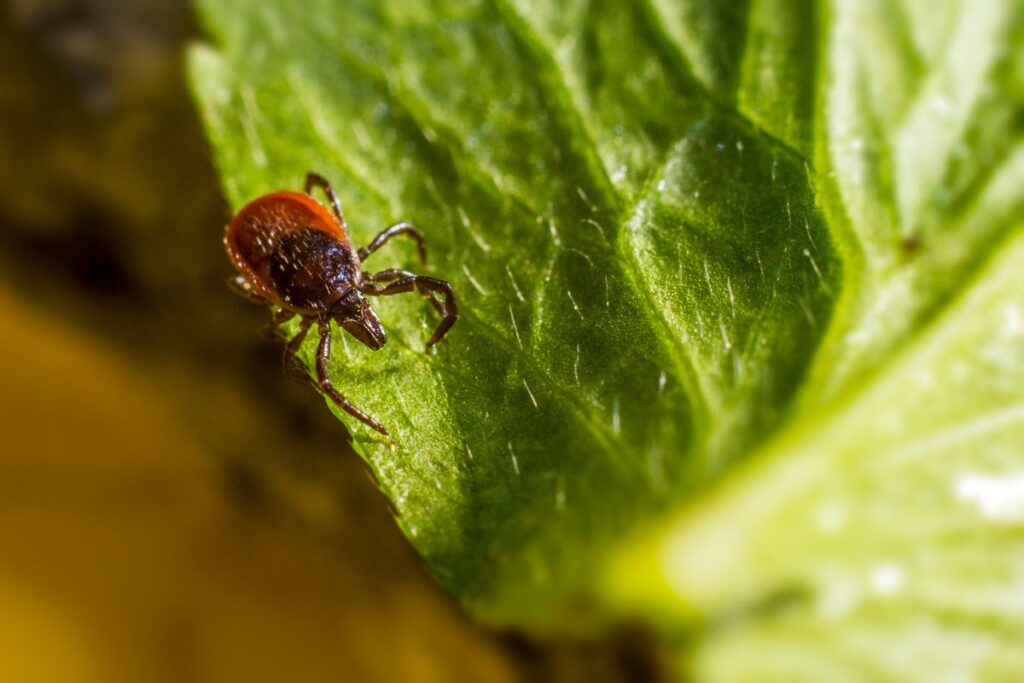
RMSF is caused by the bacterium Rickettsia rickettsii, which infects the cells lining blood vessels — the reason severe disease can involve nearly any organ. In the Southeast, the main vector is the American dog tick (Dermacentor variabilis), a common tick of grassy fields, road edges, and yards, with the brown dog tick implicated in some regions. Cases peak from spring through early fall, matching the region’s long outdoor season.
What Are the Symptoms of Rocky Mountain Spotted Fever?
Symptoms begin abruptly 3–12 days after the bite. The early picture is a severe, fast-moving febrile illness:
- High fever, often with chills
- Severe headache
- Muscle pain, especially in the calves
- Nausea, vomiting, sometimes abdominal pain
- Loss of appetite and profound malaise
The characteristic rash usually appears 2–4 days after the fever starts: small, flat pink spots beginning on the wrists, forearms, and ankles, spreading inward to the trunk. Palm and sole involvement is a classic clue — but it tends to appear late, and roughly 10% of patients never develop a rash (“spotless” RMSF). A patient who looks like severe flu after a tick bite deserves RMSF on the differential, rash or no rash.
How Is RMSF Different From Lyme Disease?
| Feature | Rocky Mountain Spotted Fever | Lyme Disease |
|---|---|---|
| Cause | Rickettsia rickettsii | Borrelia burgdorferi |
| Main Southeast tick | American dog tick | Blacklegged (deer) tick |
| Onset | Abrupt, severe, fast-moving | Gradual, often mild at first |
| Rash | Small spots, wrists/ankles spreading inward; palms and soles | Single expanding lesion at the bite site (when present) |
| Danger window | Days — can be fatal within the first two weeks untreated | Months to years — chronic complications |
| First-line treatment | Doxycycline, started immediately on suspicion | Doxycycline (see our early Lyme guide) |
The practical difference is tempo: Lyme is a marathon illness; RMSF is a sprint. RMSF is treated the day it is suspected.
Why Shouldn’t Treatment Wait for Test Results?
Because the standard antibody test (IFA serology) is usually negative during the first week of illness — exactly the window when treatment determines the outcome. Untreated, RMSF fatality rates historically exceed 20%; with doxycycline started promptly, they fall below 1%. Outcomes deteriorate sharply when treatment begins after day five of symptoms. For this reason, national guidance is unambiguous: doxycycline is started for all ages, including children, on clinical suspicion, with paired serology confirming the diagnosis afterward.
How Is RMSF Treated?
Doxycycline is the first-line treatment for every age group, typically continued until at least three days after fever resolves. Severe cases — confusion, breathing difficulty, signs of organ involvement — are hospitalized. Recovery from promptly treated RMSF is usually complete; delayed treatment can leave lasting vascular and neurological damage, which is why the “wait and see” instinct is the true enemy with this disease.
How Do You Prevent RMSF?
The same tick discipline that prevents Lyme: EPA-registered repellent, permethrin-treated clothing for high-exposure activities, daily tick checks after time outdoors (dog ticks favor the scalp, waistband, and sock line), prompt fine-tweezer removal, and treating pets — dog ticks are named for a reason. Our guide to what to watch after a tick bite covers the post-bite monitoring window for the full range of Southeast tick-borne diseases, including ehrlichiosis and anaplasmosis.
Dr. Blissenbach evaluates and treats tick-borne illness via telemedicine for patients in Florida, Georgia, Alabama, South Carolina, North Carolina, and Virginia. Contact us to schedule a consultation, or learn more about our Lyme disease treatment services.
Frequently Asked Questions
How soon after a tick bite do RMSF symptoms start?
Typically 3 to 12 days. The illness usually opens abruptly with high fever, severe headache, and muscle pain — the rash, when it appears, usually follows 2 to 4 days after the fever begins.
Does Rocky Mountain spotted fever occur in Florida and the Southeast?
Yes. Despite the name, most U.S. cases occur in the South — North Carolina is consistently among the highest-reporting states, and spotted fever group rickettsiosis is reported across Florida, Georgia, Alabama, and the Carolinas. The American dog tick, the main vector here, is common throughout the region.
What does the RMSF rash look like?
Small, flat pink spots that classically begin on the wrists, forearms, and ankles, then spread toward the trunk. Involvement of the palms and soles is characteristic but often appears late. About 1 in 10 patients never develops a rash at all — absence of a rash must never delay treatment.
Can Rocky Mountain spotted fever be cured?
Yes — promptly treated with doxycycline, most patients recover fully, and fatality falls below 1%. The danger is delay: untreated RMSF is the most lethal tick-borne disease in the U.S., and outcomes worsen sharply when treatment starts after the fifth day of illness.
When should I go to the emergency room?
If you develop high fever with severe headache within two weeks of a tick bite or outdoor exposure — especially with a spreading rash, confusion, or difficulty breathing — seek immediate care and tell the clinicians about the tick exposure. RMSF is a same-day treatment decision, not a wait-for-results situation.
This article is for educational purposes and is not a substitute for individualized medical advice, diagnosis, or treatment. Always follow the guidance of your treating clinician.