
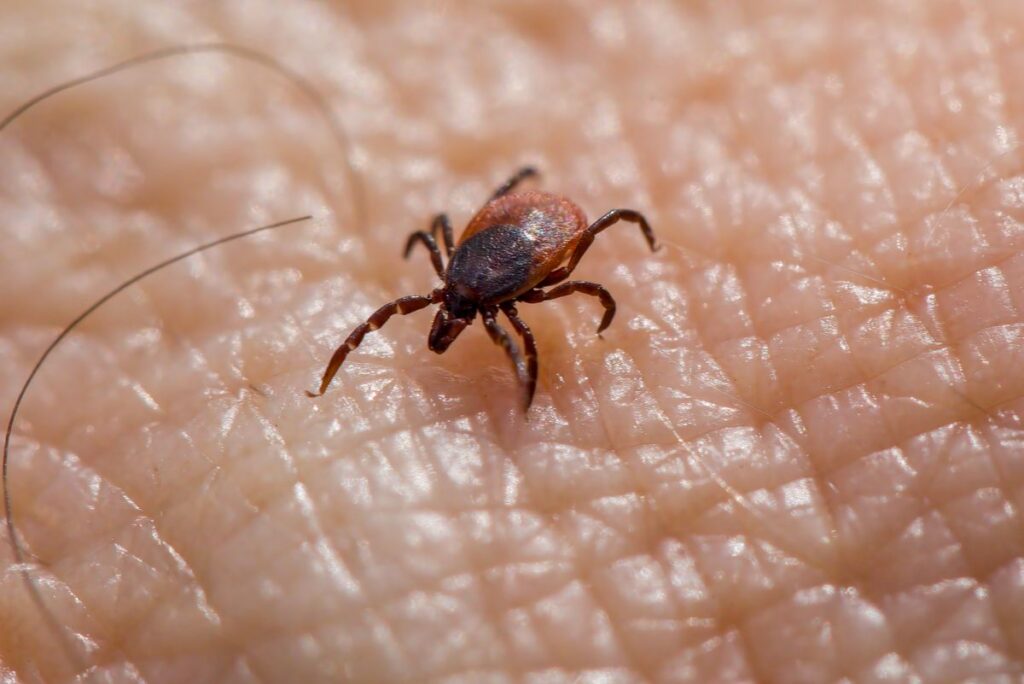
Ask a New Englander about tick season and they will say summer. In the Southeast, the honest answer is longer and less comfortable: our mild winters mean tick activity never fully stops — it just changes shape through the year.
Medically reviewed by Elyssa A. Blissenbach, MD, board-certified internal medicine physician.
Spring Through Early Summer: Peak Nymph Season
April through July is the highest-risk window. Nymphal ticks — poppy-seed sized and nearly impossible to spot — are hungriest in late spring and early summer, and nymphs cause the majority of Lyme disease transmission nationally. Lone star ticks, the Southeast’s most aggressive biters, are also at full activity.
Summer: Heat Slows but Does Not Stop Them
Deep summer heat and dry spells reduce tick questing during the day, but shaded, humid habitat — leaf litter, tall grass, the woods edge of a yard — keeps them active. Early morning and evening outdoor time carries more risk than midday.
Fall: The Second Wave
October and November bring adult blacklegged ticks out to feed — and adult females are the second major source of Lyme transmission. Hunters, hikers, and anyone doing fall yard cleanup should treat autumn as a genuine tick season, not the end of one.
Winter: The Southeast Exception
North of us, hard freezes send ticks dormant. In Florida and south Georgia, winters rarely stay cold enough for long enough — adult blacklegged ticks remain active on any mild day above roughly the mid-40s. A January hike here is not risk-free.
What This Means Practically
- Run tick precautions (repellent, checks after outdoor time) year-round, with extra vigilance April–July and October–November
- Know the tick-bite response steps before you need them
- Do not dismiss flu-like symptoms after outdoor exposure just because it is “not tick season” — here, it almost always is
Frequently Asked Questions
Is Lyme disease common in Florida?
Less common than in the Northeast, but cases are reported every year, and other tick-borne diseases — STARI, Rocky Mountain spotted fever, ehrlichiosis — are genuine Southeast risks.
Which tick should Floridians worry about most?
The lone star tick is the most frequent human biter in the region; blacklegged (deer) ticks carry Lyme disease; American dog ticks transmit Rocky Mountain spotted fever.
Do ticks die in a Florida winter?
No. Activity drops on cold snaps but resumes on mild days, which is most of them.
Northeast Florida Internal Medicine treats Lyme disease and other tick-borne illnesses in person in Jacksonville and via telemedicine for patients in Florida, Georgia, Alabama, South Carolina, North Carolina, and Virginia. Contact us to schedule a consultation.
This article is for educational purposes only and is not a substitute for professional medical advice, diagnosis, or treatment. Always seek the advice of a qualified physician with any questions about a medical condition.